Is a GI Map Test Right for You? Let’s Talk Sh*t, Literally.
A GI Map test is a comprehensive stool analysis, so yes, we need to talk about poop. Really.
You might deal with persistent bloating, unpredictable bathroom habits, constipation, diarrhea, or digestive discomfort that won’t quit. You probably wonder, “What the heck is going on in my gut?” Maybe you tried cutting dairy, dropping gluten, or taking probiotics. Maybe you followed every gut health trend on social media. Yet you still don’t feel your best.
Here’s the kicker: your symptoms might reach beyond your gut. You may also face fatigue, skin issues, unexpected weight gain, new food allergies, or unexplained inflammatory symptoms. Your digestive system doesn’t operate in a vacuum. That’s why we take gut health so seriously at keeksand.co.
Enter the GI-MAP. This lab test lets us look closely at what happens inside your digestive tract. But is it worth it? What can it tell us? And do you really need to send your poop to a laboratory?
Let’s get into the nitty-gritty. Or should we say, the sh*tty-gritty?
What Is a GI Map Test, Anyway?
Diagnostic Solutions Laboratory developed the GI-MAP, which stands for Gastrointestinal Microbial Assay Plus. Routine stool testing usually targets one specific infection. The GI Map comprehensive stool test checks a much broader range of microorganisms and digestive health markers.
It uses qPCR technology, short for quantitative polymerase chain reaction. This quantitative PCR method identifies and measures specific DNA sequences in your stool sample. In simpler terms, we see who hangs out in your gut and what they might be doing. Then we check whether those findings explain your symptoms.
The test evaluates selected bacteria, parasites, viruses, fungi, and markers of digestion, immune activity, and intestinal inflammation. However, finding an organism doesn’t mean it causes problems. Some bacteria are normal residents of your digestive tract. Even potentially harmful organisms don’t always cause symptoms.
That’s where clinical interpretation comes in. We don’t treat every flagged number on a laboratory report. We want to understand how those findings relate to you.
What Does a GI Map Test Show?
Your gastrointestinal tract hosts trillions of microorganisms. Scientists call this community your gut microbiome. Contrary to what the internet says, bacteria aren’t automatically the enemy. Many support digestion and immune function.
The GI Map stool test evaluates several categories of markers:
Bacteria and pathogens: Selected beneficial and potentially harmful bacteria, including Helicobacter pylori (H. pylori), which can cause gastritis and peptic ulcers. The panel also includes a virulence factor for H. pylori.
Parasites, fungi, and other microorganisms: Selected parasites, protozoa, viruses, fungi, and yeasts, including Candida species.
Digestive function: Markers such as pancreatic elastase, which offers information about digestive enzyme production.
Inflammation and immune activity: Markers such as fecal calprotectin and secretory IgA. These reveal different information about intestinal inflammation and immune activity.
Some markers have well-established clinical uses. Others have limited evidence behind their interpretation. Together, the findings offer useful clues, but a laboratory report is only one piece of the puzzle.
Your Gut Health Is About So Much More Than Poop
Your gut does more than digest food and decide when you visit the bathroom. It also supports nutrient absorption, immune function, metabolism, and communication across your body.
A large share of your immune activity connects to your gastrointestinal tract. Researchers have also found links between the gut microbiome and skin conditions like eczema and acne. They continue to study how intestinal inflammation relates to insulin sensitivity, hormone pathways, and weight loss concerns. A stool test, however, cannot tell you whether you have a food allergy.
Does this mean your gut causes every symptom? Of course not. But when digestive complaints show up alongside fatigue, skin issues, or hormonal concerns, we look at the bigger picture. We don’t treat each symptom in isolation. That’s what integrative nutrition is all about, and it supports your overall health.
Why We Prefer Data Over Guesswork (and Insane Elimination Diets)
Here’s one of our biggest pet peeves in the wellness world. You have bloating, fatigue, or skin issues. Someone tells you to eliminate gluten, dairy, eggs, soy, corn, and everything else you enjoy. Then they hand you a long supplement list and tell you to wait for the magic.
No, thank you.
Food sensitivity panels that measure food-specific IgG antibodies frustrate us most. Despite their popularity, major allergy organizations do not recommend them for diagnosing food allergies or intolerances. IgG responses often reflect exposure to foods, not an adverse reaction. Patients then cut nutritious foods based on results that don’t reliably identify a problem. That’s not personalized nutrition. That’s expensive guesswork.
When appropriate, the GI-MAP gives objective measurements of selected organisms and markers. We evaluate those data alongside your symptoms. Does intestinal inflammation need further investigation? Could any finding explain why past interventions failed?
GI Map testing doesn’t replace validated food allergy testing, and not every patient needs it. If a clinician uses it selectively, it offers a different kind of information than an unvalidated food sensitivity panel. We’d rather investigate what contributes to your symptoms than restrict your diet and hope for the best.
Does GI Map Test for SIBO?
No, the GI-MAP does not test for SIBO. The test analyzes stool, which mainly reflects your large intestine, not your small intestine. Doctors usually diagnose SIBO with breath testing, as the American College of Gastroenterology guideline describes.
If you spend time in the gut health corner of the internet, you’ve heard of SIBO. Small intestinal bacterial overgrowth means too many bacteria live in the small intestine. It causes bloating, abdominal discomfort, and changes in bowel habits. These symptoms overlap with other conditions, including irritable bowel syndrome (IBS), so proper evaluation matters.
We approach this differently. We don’t chase a SIBO diagnosis just to name your symptoms. Even when testing confirms SIBO, the next question should be: why did it happen? Impaired intestinal motility, altered anatomy, and certain gastrointestinal disorders can all contribute. If no one addresses those factors, symptoms may return.
Broader stool findings may still prompt us to consider further evaluation for SIBO or another digestive condition. We use available information to ask better questions and choose next steps. We want sustainable improvement, not a collection of diagnoses.
What Happens After Your GI Map Results Come Back?
This is where the work begins.
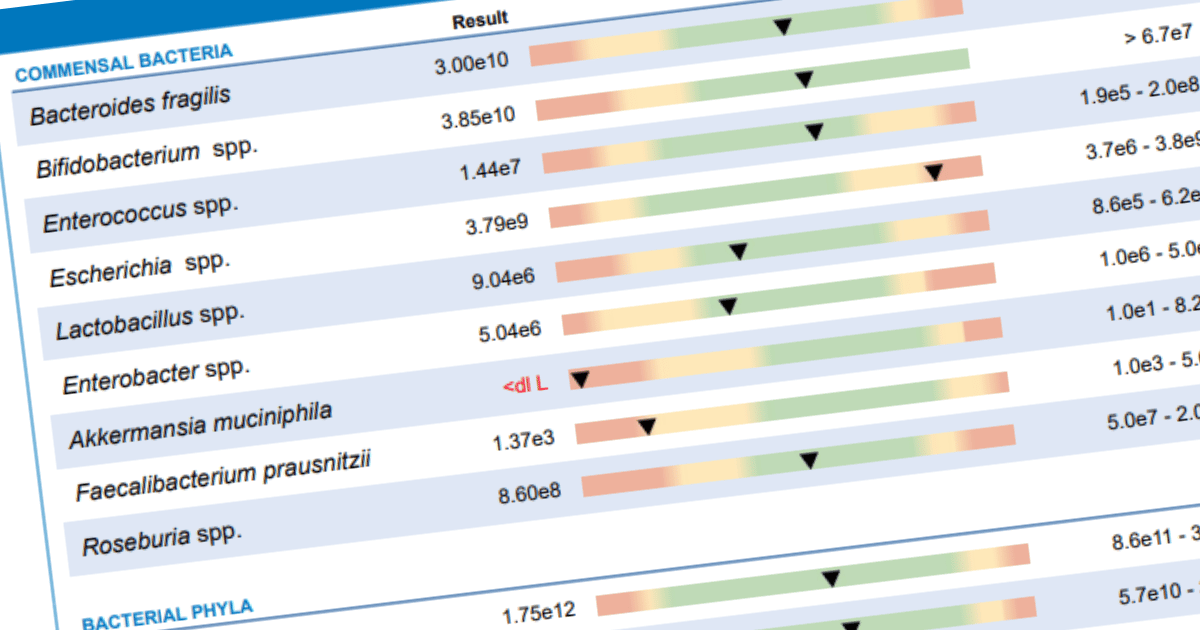
Say your results just arrived. Now you hold a report full of bacteria, numbers, reference ranges, and a few red highlights. Before you panic and Google every organism listed, remember this: not every abnormal finding matters clinically.
At keeksand.co, we review your results alongside your symptoms, dietary patterns, medical history, and medications. We create personalized treatment plans within our scope of nutrition care. We use clinically meaningful findings to guide individualized recommendations.
We believe in food first, but we stay realistic. Sometimes nutrition alone isn’t enough, and targeted supplements play a role. That might include specific probiotics, digestive support, or fiber supplementation. But more supplements don’t mean better results. We won’t throw a whole supplement cabinet at your gut because a few numbers look questionable. Every recommendation needs a purpose, with safety, medication interactions, and evidence in mind.
We also recognize when a finding needs medical treatment. Our registered dietitians don’t diagnose gastrointestinal diseases or prescribe medications. We collaborate with or refer to medical professionals instead. That might mean a gastroenterologist for suspected inflammatory bowel disease or persistent symptoms. Our job is to connect the dots within our scope and support your next steps.
That’s what comprehensive care looks like.
GI Map Test Cost: Is It Worth the Investment?
Now for the million-dollar question. Thankfully, the price isn’t quite that high.
This test is a self-pay service, so don’t assume insurance covers it. At keeksand.co, GI Map test cost runs between $350 and $400, depending on add-ons. You meet with your dietitian before we order the test. You meet again after your results arrive to review interpretations and your protocol. Insurance typically covers those 1:1 visits with your RD.
Cost aside, the bigger question is whether the test fits you. Not everyone with bloating needs a comprehensive stool test. Sometimes a thorough nutrition assessment, strategic dietary changes, and medical evaluation do the job. For persistent or complex concerns, additional testing may be worth discussing. We want every test to have a purpose. The goal isn’t to collect laboratory reports. It’s to make better decisions with meaningful information.
Also note that results usually take 4 to 5 weeks. If your GI symptoms are acute and need immediate answers, this may not be the test for you.
Your Gut Deserves More Than Guesswork
If you made it this far, congratulations. You now know more about poop than you expected to learn today.
Here’s what we want you to take away. Your digestive symptoms deserve serious attention, especially when they affect other parts of your life. You shouldn’t normalize constant bloating, unpredictable bathroom habits, or discomfort after every meal. You certainly shouldn’t eliminate half your diet because someone online told you your gut had failed.
At keeksand.co, our registered dietitians take an integrative, individualized approach to nutrition and digestive wellness. We consider your symptoms, medical history, nutrition, lifestyle, and appropriate laboratory findings. Then we build a plan that makes sense for you. Sometimes that plan includes functional testing like a GI Map test, and sometimes it doesn’t.
Either way, our goal stays the same. We find meaningful opportunities for intervention, support your digestive health, and help you feel better without unnecessary restrictions. Because your gut deserves more attention than another random probiotic recommendation.
Ready to get to the bottom of your gut health?
Connect with the team at keeksand.co to learn more about individualized nutrition counseling and request an appointment here to get started.
Frequently Asked Questions
Does GI Map test for parasites?
Yes, GI Map tests for selected parasites and protozoa using qPCR. A negative result does not rule out every parasite, though. Your dietitian and doctor can decide whether you need more testing.
Does GI Map test for leaky gut?
No, GI Map does not test for leaky gut. No stool test can diagnose increased intestinal permeability. Markers like calprotectin and secretory IgA show inflammation and immune activity, which add context to your symptoms.
Does GI Map test for celiac?
No, GI Map does not test for celiac disease. Doctors diagnose celiac disease with blood tests and sometimes an intestinal biopsy. Keep eating gluten until your doctor finishes testing, because cutting it early can hide results.
Does GI Map test for colon cancer?
No, GI Map does not test for colon cancer. Fecal calprotectin shows inflammation, but it cannot detect or rule out cancer. Ask your doctor about colon cancer screening, such as a colonoscopy or stool-based screening tests.
Is GI Map test accurate?
Accuracy depends on what you ask the test to do. The GI-MAP relies on qPCR, a well-established method for detecting and measuring DNA. Detecting an organism accurately differs from knowing it matters, though. A trained professional should review your results with your symptoms in mind.
Is GI Map test FDA approved?
Diagnostic Solutions Laboratory describes the GI Map as a laboratory developed test that meets CLIA requirements. Laboratory developed tests typically skip FDA premarket review. That means the lab validates the test itself.
Is GI Map test covered by insurance?
Insurance usually does not cover it. The test is a self-pay service, so check your plan before you order. At keeksand.co, insurance typically covers your 1:1 dietitian visits.
Where to get GI Map test?
A practitioner orders it for you, and our registered dietitians at keeksand.co can do that. First, you meet with your dietitian, then we order your GI Map test, analyze your results, and build your plan. On your end, you complete the GI Map test at home. Collect your stool sample following the test instructions and ship it to the lab. Results take 4 to 5 weeks. Fill out our contact form to get started.